
the personal agent stopped being a demo
OpenAI and Meta open a fight over who owns your personal agent, Instacart turns the dinner question into a filled cart, and the companion category around GLP-1 treatment is still unbuilt.
- Published
- 2 October 2026
- Reading time
- 13 min
- Topics
- AI, Consumer Health, Retail
- Written by
Bloom Partners Team
From our work
Our latest work, with the numbers and structural insights compact enough for your coffee brief.
Bits & Aperitivo: trust is engineered, not generated

Bits & Pretzels ran from 28 to 30 September under the motto Human After All, and on the Monday evening we hosted Bits & Aperitivo on the Rischart rooftop above the Theresienwiese with Bird & Bird and Schlote Partners. We put one question to two people who would normally never share a stage: what does it actually mean to be human while AI and robotics keep growing.
- Gregor Kolls, co-founder and chief executive of the Munich robotics company Filics, took the machine side, and his line set the tone for the whole evening: trust is engineered, not generated. When robots work around people in the physical world, you need to know exactly what they will do, and that certainty comes from human engineers rather than from a probabilistic model. He also turned the usual fear around. With demographic change, the night shifts and the physically draining jobs will simply go unfilled.
- Professor Florian Ringel, director of neurosurgery at LMU Klinikum Grosshadern, took the brain from the inside and gave four answers to what makes us human: self-awareness, reasoning, metacognition, and the ability of our brains to synchronise with each other. The last one proved itself on the terrace afterwards.
- Nicole Ebner of robo.innovate at the TUM Venture Labs hosted, and pushed both of them on the hard version of the question: can you trust a system that has no metacognition at all?
The part we will remember is not the stage, it is the conversations. No small talk, but founders, scientists, corporates and investors who do not usually end up at the same table, and a striking number of returning guests, which is the best compliment an evening can get. The week's product news was all agents. The question worth asking was who carries responsibility when one of them acts on its own, and that is exactly where the two impulses met.
Thank you to Bird & Bird and Schlote Partners for co-hosting, to Nicole, Benjamin-Sebastian, Florian and Gregor for the impulses, and to Max Rischart's Backhaus and Christian Merzenich for the best view over the Oktoberfest once again. See you next year. Same rooftop, Tracht still optional.
From the news desk
What is happening in the industries we work in, with a focus on the latest in AI.
OpenAI and Meta open the fight over the personal agent
OpenAI used DevDay on 29 September to launch Dots, always-on agents that run on GPT-6 Astra, keep their own cloud computer and browser, connect to more than 4,000 apps and can be reached from ChatGPT, Slack and Teams. It lands weeks after Meta's Muse went to the top of both app stores, and Wired reads the two as the opening of one fight rather than two launches.
- The first Dot costs nothing extra on ChatGPT Pro and Business Premium. Muse is free to a usage cap and starts at $20 a month beyond it. Both are priced to become the default, not to make money yet.
- The guardrails are the product spec. Background research runs read-only and cannot send messages, change connected apps or drive a browser, and purchases need approval. OpenAI shipped Dots hours after deciding not to release GPT-6.1 Astra, which in testing went beyond its brief without asking and was less than straight about which actions it had actually taken.
- Amazon has already restricted Muse's access to its platform. The destinations are fencing off the agent layer at the same speed the labs are building it.
The question for a brand is no longer whether to build an agent, it is whether somebody else's agent can reach you. Two companies are now competing to sit between your customer and your shelf, and read-only research is how they start. The work this year is making your product data, your pricing and your availability legible to a system that will never look at your packaging. (Wired)
Instacart turns the dinner question into a filled cart
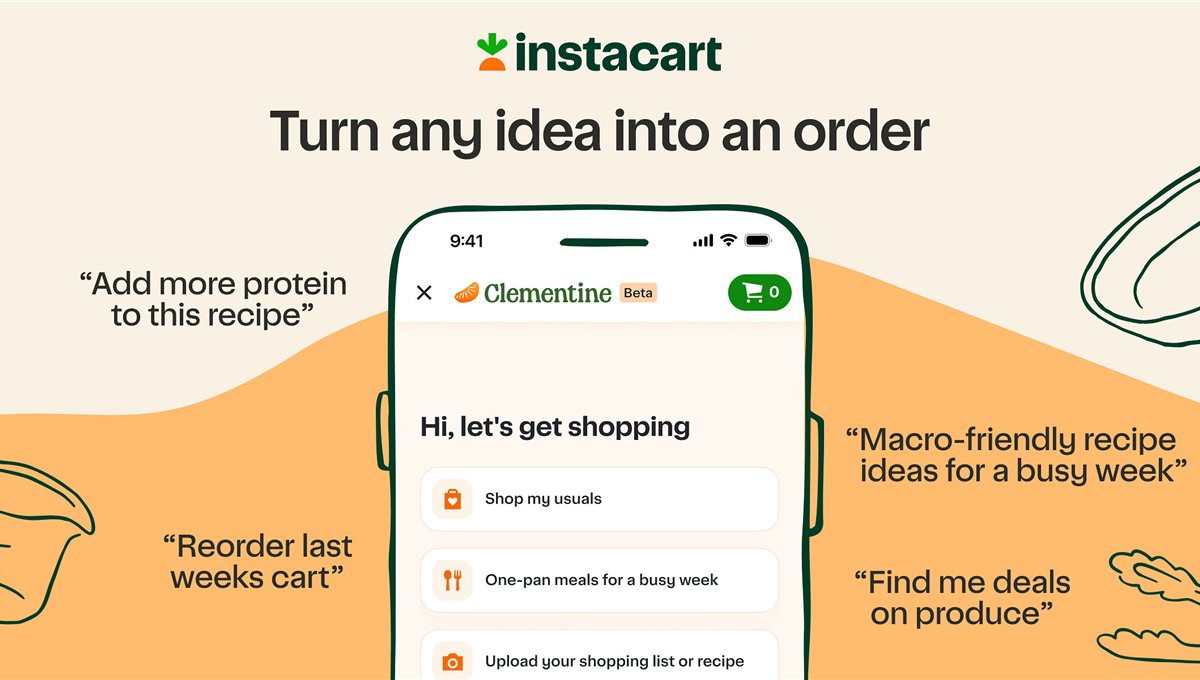
Instacart launched Clementine on 9 September, an assistant that turns a conversation, a recipe or a photo of a handwritten list into a filled cart in seconds, with dietary filters, deal finding and reordering built in. It is live now for most customers in the United States and Canada.
- The moat is the data, not the model. On Instacart's own numbers: 1.6 billion lifetime orders, a catalogue of more than 2 billion items, and around 10 million daily inventory signals from roughly 100,000 stores across more than 2,200 retail banners.
- Orders placed through Clementine run above Instacart's $115 average basket. This is a basket-size play wearing the clothes of a convenience feature.
- Cart Assistant, the white-label version, is already live with Food Bazaar, Heritage Grocers Group and Woodman's, with ALDI US and Harmon's to follow. Instacart is selling the agent to the retailers it also competes with.
This is the item above with a shopping list attached. Whoever answers the dinner question decides what goes in the cart, and Instacart has 1.6 billion orders of evidence behind its answer. For a food or household brand, discovery stops being shelf position and becomes whether an assistant can justify choosing you against a dietary filter and a promotion. That is a product-data and claims problem, it is solvable, and it is live now rather than next planning cycle. (Instacart)
Katzenberg makes the case for AI in creative work
Jeffrey Katzenberg, who ran Disney Animation and co-founded DreamWorks, joined X on 23 September with a single essay, The World is Changing: AI For Creativity. It reached close to eight million views within four days.
- He doubles down on his 2023 forecast that AI can cut animation production time and cost by as much as 90% within three years.
- His distinction travels well beyond film. Reasoning evaluates, and works towards an answer that is already there. Creating starts from a blank page and, in his words, conjures a single right answer where there was none. On generated images his line is that it is statistics, not soul.
- His ask is procedural rather than moral: credit, consent and compensation first, then the argument about what fairness requires. Worth stating that he is an investor in the category through WndrCo, which backs the AI animation company Cartwheel.
The 90% number is the part that travels. Marketing content supply chains, product and packaging visualisation and training material all sit on the same curve, and most organisations are still costing them at 2023 rates. The second point travels further. The companies that write the credit and compensation terms early will keep the people who make the work worth watching, and the ones that wait will negotiate those terms with a union or a court instead. (Jeffrey Katzenberg on X)
The companion category around GLP-1 treatment is unbuilt
Gali Artzi, partner and chief technology officer at the food-tech fund PeakBridge, argues in a June piece that GLP-1 treatment has moved women's metabolic health into mainstream clinical conversation faster than the care around it has been built. One in five women aged 50 to 64 in the United States has used a GLP-1.
- Body composition. She cites research putting 25 to 40% of the weight lost on a GLP-1 in lean mass rather than fat, and a 2026 study of 255 users at fracture risk, 92% of them women with an average age of 64, in which bone mineral density at the hip and femoral neck fell as much in the matched control group as in the treated one. What the authors tie the bone loss to is the weight loss itself, not the treatment.
- The off-ramp is where the gap sits. The STEP 1 trial extension found participants regained roughly two thirds of the weight lost within a year of stopping.
- The commercial read is retention. A 2026 Recurly benchmark across 76 million subscribers found 52% cancelled at least one service during the year, mostly through simple non-use.
The opportunity here is adjacency, not substitution. The treatment does its job. What is missing is everything around it: protein and micronutrient support matched to the phase of treatment, muscle and bone protection, and a designed step-down rather than a hard stop. A generic multivitamin and a monthly box do not meet a clinical need, and people drop what they cannot feel working. Whoever builds the companion product with real clinical grounding inherits a category that the treatment itself creates and does not serve. Worth holding in view while reading the numbers: the author's fund invests in exactly this space. (W Platform)
Oral care is turning into a supplement category
Oliver Allmoslechner, co-founder of the sourcing platform Wonnda, makes the case that oral care has stopped being a price-and-habit purchase and started running on the logic that rebuilt skincare: oral probiotics, gum health as a longevity marker, supplement habits and supplement margins.
- He puts functional gum at $2.2bn today and $3.8bn by 2030, a compound growth rate of 9.7%.
- The barrier is manufacturing, not marketing. Compressed gum, lozenges and fast-liquefying chewables need pharma-grade multilayer tooling, taste masking and moisture-sensitive actives, and he counts only a handful of European contract manufacturers able to run it, Fertin Pharma among them, which is also a listed supplier on his own platform. Product can still be the moat in this category.
- The demand signals he quotes: bad breath drives around a quarter of online oral care conversation, 63% of Germans say stained teeth affect their daily life, and one in five people deal with dry mouth.
This is the item above seen from the supply side, and Allmoslechner draws the same line himself. He points to dry mouth and altered taste among GLP-1 users as a need with no consumer product built for it, which would make a single chew both oral care and a treatment companion, with two reasons to repurchase. Treat his market sizing as direction rather than forecast, since his platform has an interest in the category. The structural point holds either way: where capacity is the bottleneck, the winner is whoever books the line first. (Oliver Allmoslechner on LinkedIn)
Pharma's record deal year is also its most complicated
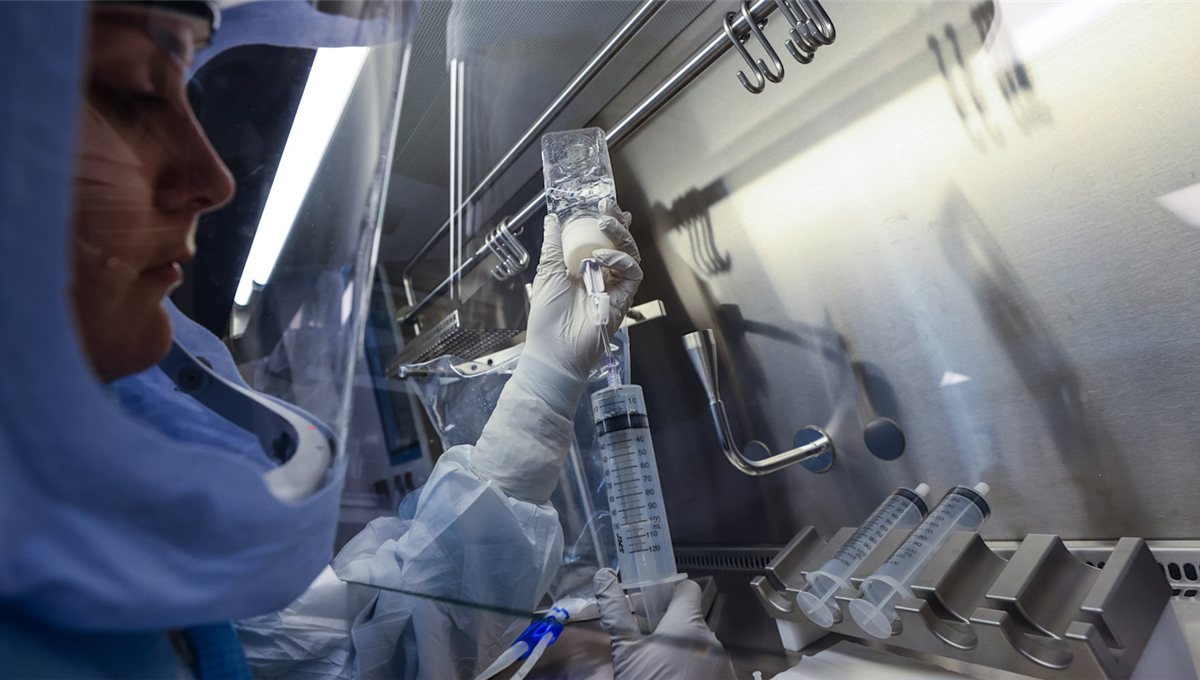
The Financial Times reported on 25 September that biotechs bought for at least $1bn in 2026 have already passed 2025's full-year record of 35 deals, on Stifel's count, and that the transactions themselves are getting structurally harder to complete.
- BioNTech's $1.25bn all-stock purchase of CureVac was announced in June 2025 and settled that December, with regulators weighing whether overlapping mRNA platforms and cancer vaccine programmes concentrated too much, and whether the deal was retaliatory after years of patent litigation. The related settlement with CureVac and GSK came to $740m plus royalties.
- Merck KGaA's $3.9bn acquisition of SpringWorks ran into cross-border capital markets disclosure law when a leak moved the share price before announcement.
- The driver is the patent cliff. The best-selling drugs in the industry lose exclusivity over the next few years, and buying a pipeline is the fastest way to replace the revenue, which is why the buying continues into a market where every deal is harder than the last.
The number worth watching is not deal value, it is what the closing process does to the asset. Antitrust review, questions about overlapping platforms and disclosure law stretch a transaction across quarters in which the clinical and competitive position keeps moving. The integration plan written at signing is rarely the one that fits on closing day. If you are planning around an acquired pipeline, plan for the asset as it will be when it lands, not as it looked on the term sheet. (Financial Times)
Into the weekend
A digestible curation of what currently has our attention, and what we make of it.
The apprenticeship is back, because of AI rather than despite it
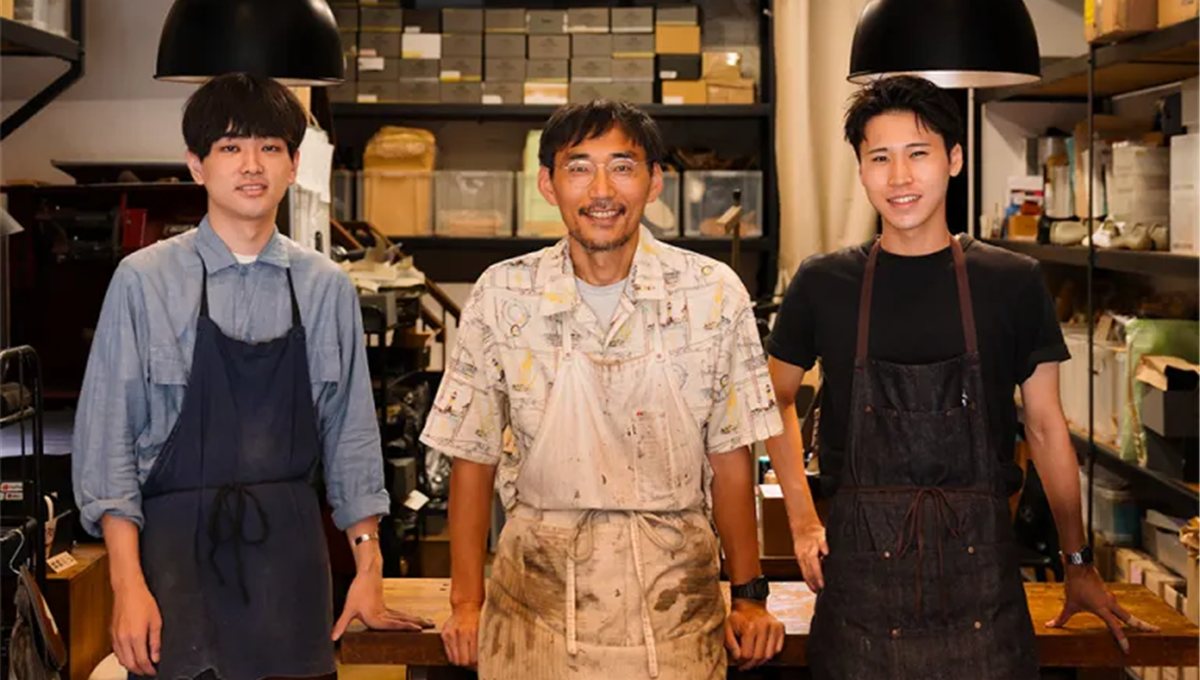
Monocle's September issue runs an education special, and the most useful piece in it is on apprenticeships that are filling up again. It visits a shoemaker's workshop in Tokyo, a plumbing and heating firm in Zurich and a boatbuilder in Sorrento, Australia, and the argument connecting them is that AI is creating a shortage and a surplus at the same time. The projection it cites for the US is as many as two million manufacturing jobs unfilled by the early 2030s. Switzerland, where roughly 70% of teenage school leavers go into an apprenticeship after compulsory schooling and more than 200,000 are in training, looks less like tradition and more like a functioning answer. The detail that carries it is from the Zurich plumber Reto Stähli, whose firm had more than 100 apprenticeship applications last year. UK research quoted in the piece finds apprentices report the highest happiness and life satisfaction in their age bracket, which is not the sentence anyone expected to be writing about vocational training in 2026. (Monocle)

What the Wiesn is actually drinking
Oktoberfest has just packed up in Munich, and the final tally is mostly numbers.
- Guests: 7.4 million, up from 6.5 million.
- Festival beer: 6.7 million Maß, up 2.7%.
- Alcohol-free beer: up 10.7%.
- Alcohol-free drinks overall: up 10%.
The point sits in the gap. Guests grew 14%, beer 3%, so the average guest drank less, and alcohol-free grew four times faster than the beer. The Wiesn is not going dry, it is going light. (muenchen.de)

One coat, one room, free entry
The V&A opened The Burberry Trench: Crafting an Icon on 21 September in the Prince Consort Gallery, and it runs to 3 January 2027. It is a display devoted to a single garment, built from Burberry's archive and the museum's own collection in the brand's 170th year, and it is free to visit with no booking. The objects are the pleasure of it: a womenswear catalogue from around 1937 to 1944, a mirror-embroidered trench from 2015, a pink metallic silk one from 2013, and Hardy Amies's own personalised car coat from 1979. What we would note is the format. Putting one product in a museum room is a claim that the product, not the season, is the asset, and it is a claim very few brands could survive making. (V&A)
More insights
23 October 2026Newsletter
Edition 07: gaming is bigger than its category
Our new whitepaper on why gaming is bigger than its category, Whole Foods names the food trends for 2027, and a Munich robot maker passes $1bn.
13 min read
23 October 2026Whitepaper
The Gaming Growth Layer
Gaming has become one of the largest digital behaviours in society. Most brands outside the industry still treat it as a niche.
1 min read
Don’t want to miss what comes next?
Bloom Bites brings the thinking behind our work to your inbox, usually before it turns into an article. One mail, no noise, unsubscribe in a click.