
what 400 founder biographies say about leadership
Four hundred founder biographies rewrite what leadership looks like, Anthropic places a flagship bet on AI for science, and IM8 raises $1 billion in premium consumer health.
- Published
- 24 July 2026
- Reading time
- 7 min
- Topics
- AI, Consumer Health, Leadership
- Written by
Bloom Partners Team
From our work
Our latest work, with the numbers and structural insights compact enough for your coffee brief.

AI is framing pretty much every boardroom discussion we are having at the moment. And while the strategic relevancy is by now well understood, we often observe the opposite in Marketing. Almost every conversation about marketing and AI begins - and too often ends - as an operational question: how do we generate, personalise, optimise and automate faster? It's an understandable instinct, but a shortsighted one. Framing AI as a matter of execution quietly assumes the hard strategic questions have already been answered, when its real significance is precisely the opposite: it commoditises execution and lays bare whether any strategy ever sat beneath it.
The task then is not to collect efficiency and productivity wins for their own sake, but to make sure they stack up towards one broader vision. Done right, these use cases sit on a scalable infrastructure and tech layer, one that can, in time, support a genuinely agentic layer rather than a patchwork of tools. Thirdly, that layer will open a much broader shift towards rethinking the business model, not just the Marketing function, AI-first. This is the conversation we're determined to drive: away from AI as a faster / smarter way to do what marketing already does, and towards a more holistic view of strategy, brand and demand.
In practice that recently meant to shift the strategy of a global consumer health firm away from the GEO arms-race around performance and rented visibility towards investing into a consistent first-party data relationship as a self-inforcing trust layer. For a global pharma leader we shifted the focus towards deploying AI internally: building up a unique patient / HCP support capability for higher-judgement queries to become the one source of truth within the disease category.
It is a lens we believe carries far stronger and more durable impact across the industries we care most about: consumer goods, healthcare and industrials.
From the news desk
What is happening in the industries we work in, with a focus on the latest in AI.
What 400 founder biographies reveal about leadership
In conversation with Sequoia Capital this week, David Senra (who has spent nearly a decade reading a founder biography a week for his Founders podcast, more than 400 in total) was asked to distil everything into a single word. His answer: focus, or what he calls "mute the world and build your own." The best builders, he argues, obsess over the problem rather than the trappings of success, and never sleep on a win; that restlessness is the drive engine, not a bug. He also makes a claim that travels well beyond start-ups: that founder-problem fit matters more than product-market fit. For us, the interesting move is to lift these traits out of the founder myth and into the corporate context. Focus, ownership of a problem, and a refusal to coast are not the preserve of the person whose name is on the door. They are leadership behaviours any function can choose to practise or quietly abandon, provided the organisation is built to let them: the right structures and processes have to protect that focus from being drowned out by overwhelming reporting, competing priorities, and reflexive consensus-seeking. In large organisations, where activity is so easily mistaken for progress, the founders' lesson is a useful: pick the problem that matters most, go deep, and lead as if the whole enterprise depended on getting it right.
Anthropic places a flagship bet on AI for science
At the end of June, Anthropic launched Claude Science, a standalone product designed to support scientific research in the same way Claude Code supports software engineering. As MIT Technology Review reports, the platform allows researchers to run complex life sciences workflows through natural language, with direct integration into high-performance computing environments. Anthropic is also using the tool to pursue its own research into drug candidates for neglected diseases, positioning itself to take up the scientific mantle that Google DeepMind has held for the past decade. For us, the question is not whether AI accelerates drug discovery. It already does. It is which organisations build the workflows and proprietary data layers that turn that acceleration into a durable competitive position.
IM8 raises $1 billion, and signals where premium consumer health is heading
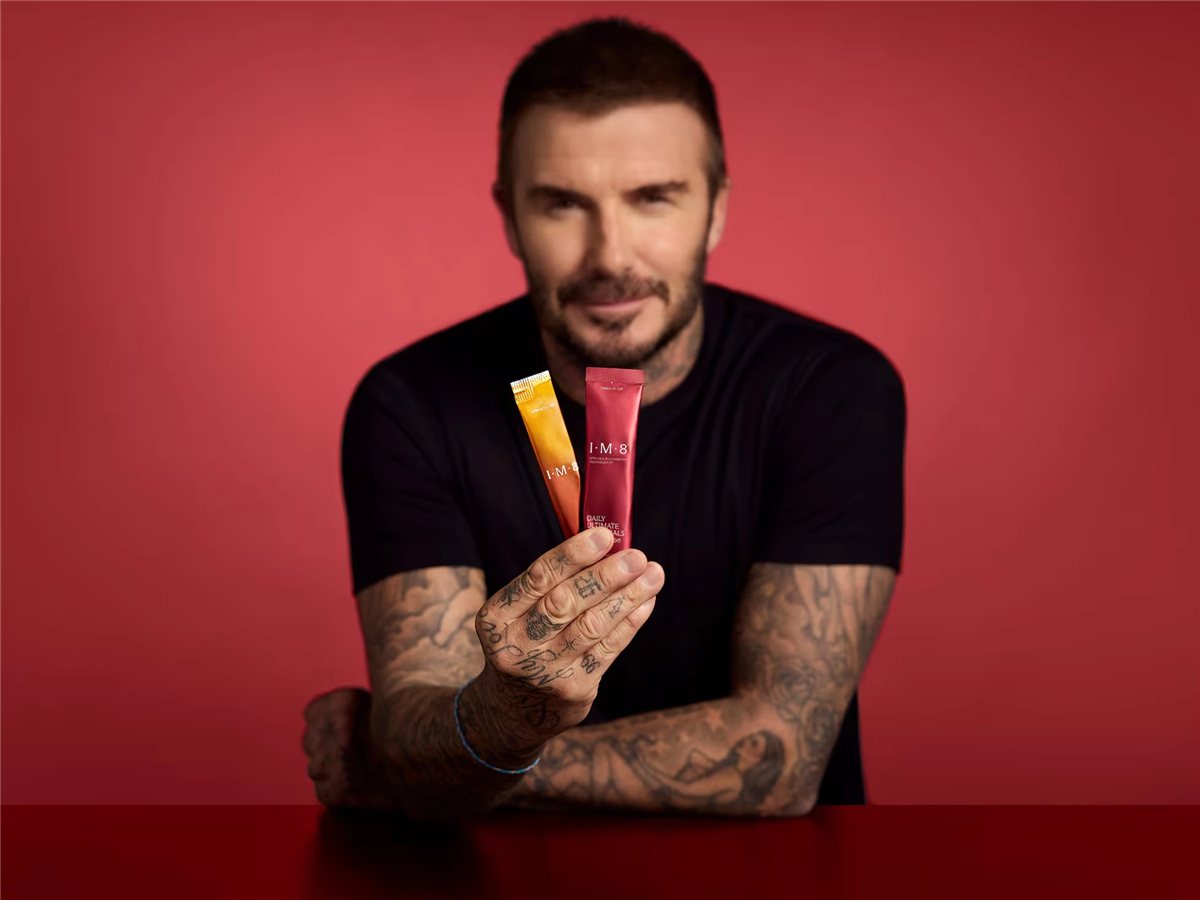
This week, IM8 (the AI-native wellness brand co-founded by David Beckham and backed by Prenetics) closed $1 billion in growth financing from General Catalyst's Customer Value Fund. The structure is notable: rather than dilutive equity, General Catalyst finances up to 70% of IM8's marketing spend in exchange for a capped share of revenue from the customer cohorts it funds. IM8 delivered $17 million in revenue in June alone, its strongest month on record, and is guiding to more than $400 million for 2027. In our point of view, the financing structure is more interesting than the valuation. It shows that underlying customer economic capabilities (CAC / LTV) are seen as a strategic asset by itself. For non-DTC or omnichannel business models that means that the near-term priority needs to be building infrastructure to proof acquisition and retention economics at cohort-level, a bar most legacy consumer health players can't clear yet.
Four forces are reshaping how consumers discover, decide and spend
McKinsey's State of the Consumer 2026 identifies four structural shifts redefining the sector: the AI- and social-media-driven path to purchase, a broadening health revolution, the continued primacy of experiences over goods, and the rise of the resourceful consumer who trades down selectively rather than uniformly. On brand visibility: only 1% of sources cited by LLMs in consumer goods queries come from brand-owned websites, a finding that reframes what "showing up" means in an AI-mediated discovery environment. The four trends are individually well-documented; what the report does well is show how they interact. A consumer who is health-conscious, price-sensitive, and navigating AI-mediated discovery is one consumer, not many. And the brands that treat them as such will earn the right to be chosen.
Will AI model labs end up as low-margin commodity infrastructure?
Benedict Evans published a carefully argued piece this week on where token pricing eventually settles. His argument: every structural dynamic currently visible points toward foundation models becoming low-margin commodity infrastructure, with value captured further up the stack by whoever builds the applications on top. The mobile data parallel is instructive: two decades of explosive usage growth, a trillion-dollar industry, and telco stocks that went nowhere. The question we are answering with our clients is always "where in our business model does the real value sit?" The infrastructure layer rarely wins. The application layer (the workflows, the proprietary data, the trust built around them) almost always does.
Into the weekend
A digestible curation of what currently has our attention, and what we make of it.
The Munich couple building "Nespresso for nut butter."
Amelie and Timo Sperber started Supernutural as a machine-maker for hotel breakfast buffets. Their nut-grinding devices now sit in FC Bayern's canteen, on Ritz-Carlton yachts and at Hilton and Marriott properties worldwide. After a decade selling only to businesses, they've just launched a €399 home version, backed by a €500,000 raise on Germany's answer to Shark Tank. Their own line: "fresh like orange juice, available like Nespresso." A nice reminder that some of the sharpest growth stories are still built one kitchen counter at a time.

The generation quietly giving up alcohol isn't the one you'd expect
New IWSR data, cited this week in the FT, finds that Baby Boomers now have the lowest drinking rate of any generation, with consumption falling across every metric: occasions, volume, and drinks per sitting. Gen Z, meanwhile, is quietly catching up with the adult average. The drinks industry has spent years blaming weak sales on sober-curious youngsters. The data suggests they've been watching the wrong generation.
Espresso as the new Ecstasy
The FT spent a Sunday morning at a 5k run along the Thames followed by five hours of caffeine-fuelled dancing, one of a growing number of daytime events where the high comes from endorphins and espresso. Coffee Culture has hosted over 60 of these in its first year; similar formats are taking off in Miami, Dubai and Paris. The crowd skews young, but original ravers who now want to be in bed by 10pm are showing up too.
More insights
23 October 2026Newsletter
Edition 07: gaming is bigger than its category
Our new whitepaper on why gaming is bigger than its category, Whole Foods names the food trends for 2027, and a Munich robot maker passes $1bn.
13 min read
23 October 2026Whitepaper
The Gaming Growth Layer
Gaming has become one of the largest digital behaviours in society. Most brands outside the industry still treat it as a niche.
1 min read
Don’t want to miss what comes next?
Bloom Bites brings the thinking behind our work to your inbox, usually before it turns into an article. One mail, no noise, unsubscribe in a click.