
the restaurant that turned into software
Wonder turns a restaurant into software, AI enablement moves from technology deployment to enterprise capability, and healthcare M&A reprices around data rather than therapies.
- Published
- 7 August 2026
- Reading time
- 9 min
- Topics
- AI, Consumer Health, Food & Beverage
- Written by
Bloom Partners Team
From our work
Our latest work, with the numbers and structural insights compact enough for your coffee brief.
FUTURE LEAD 2026: Leadership is becoming more human after all
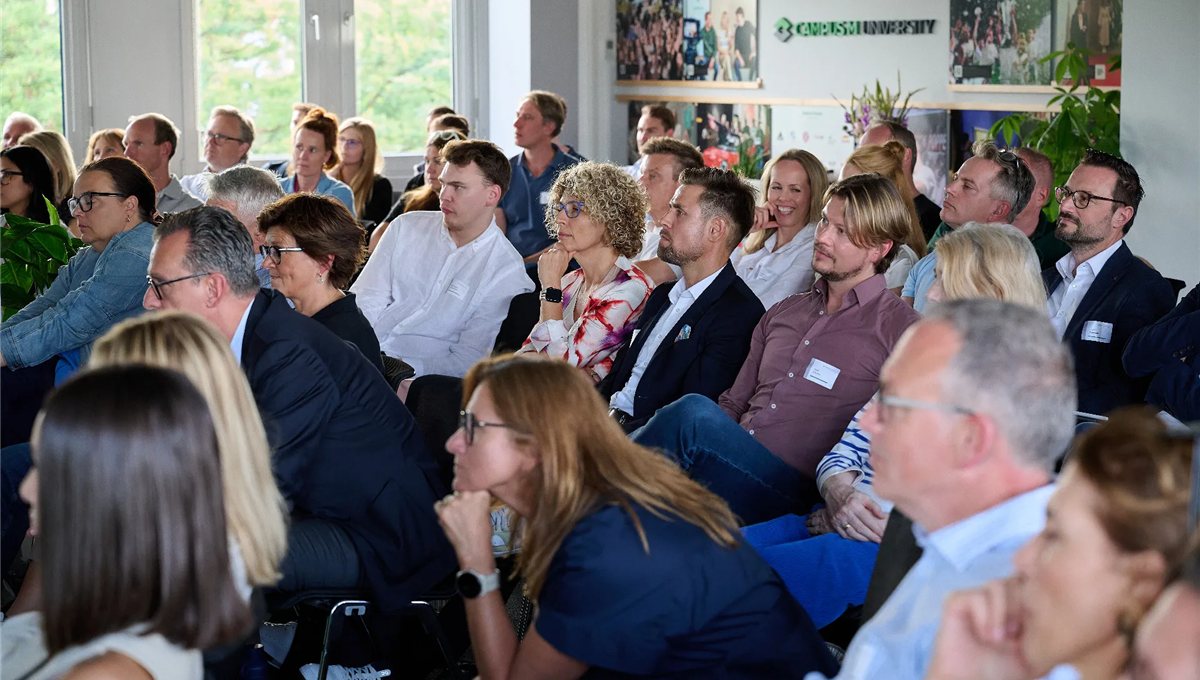
Last week, together with Campus M University, we hosted the second edition of FUTURE LEAD in Munich, bringing together corporate leaders, entrepreneurs and academics to discuss one question: what does leadership look like in an AI-native world?
adidas shared how one of the world's most iconic brands navigated a profound turnaround, from rebuilding trust after years of turbulence to redefining strategy under new leadership and reigniting a global brand. Siemens offered a rare look inside what AI transformation actually means at enterprise scale: thousands of use cases, fragmented data landscapes and the challenge of turning technological potential into organisational capability. Our Munich start-up Supernutural demonstrated what entrepreneurial leadership looks like when building a consumer brand from scratch, balancing relentless experimentation with a clear long-term vision. Lastly, taking a very different angle through the eyes of sports, Handballgemeinschaft München reminded us that creating talent is ultimately about creating environments in which people are trusted, challenged and able to grow.
Across every conversation, leadership seemed to become more human, not less. As AI increasingly automates analysis, content creation and execution, competitive advantage shifts towards the capabilities technology cannot replace so easily: judgement, curiosity, empathy, trust, the courage to make difficult decisions and the ability to align people behind a common ambition. Technology may accelerate organisations, but organisational capability makes it reality.
Perhaps that is why the most memorable moments happened long after the final presentation. Our guests stayed long into the evening exchanging ideas, challenging perspectives and making new connections. Leadership is becoming more human after all.
From the news desk
What is happening in the industries we work in, with a focus on the latest in AI.
Wonder: from restaurant to software
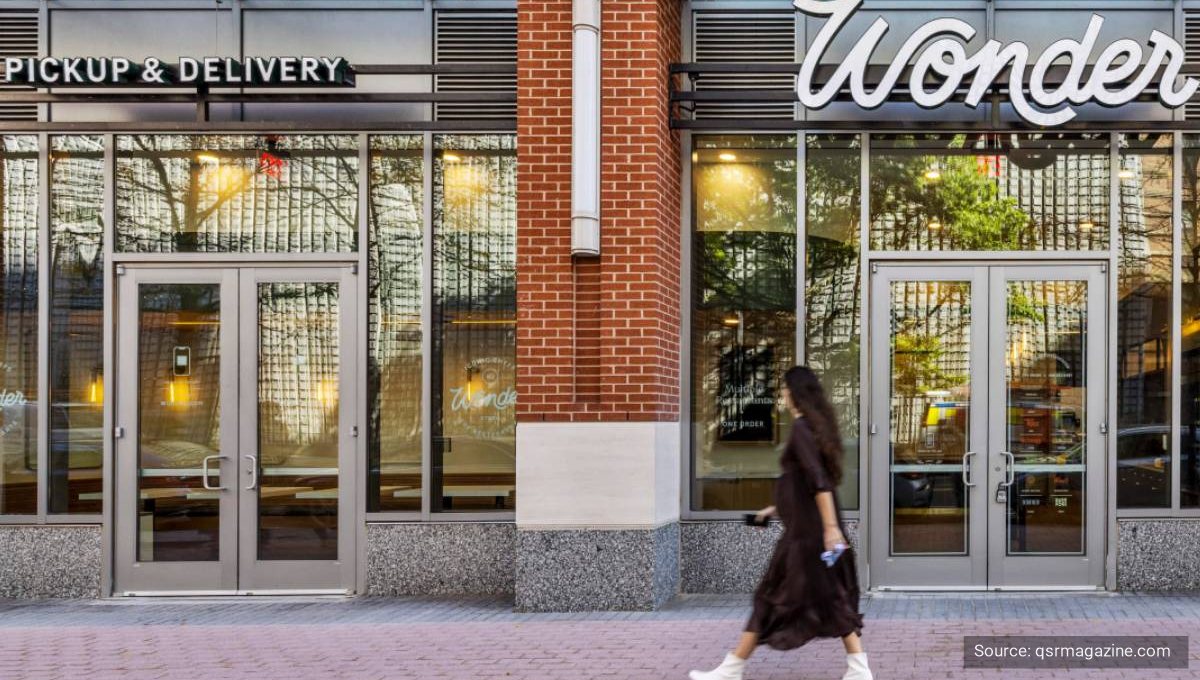
The US-based restaurant group Wonder closed a Series D of more than $650 million in July at a $9 billion valuation, with Accel, GV and NEA returning alongside new backers AllianceBernstein, Cathie Wood's ARK Invest and Kayne Anderson. The round brings total funding to roughly $3 billion since 2018, a period in which Wonder has folded in Grubhub and Blue Apron. It now runs 135 food halls across ten East Coast states. And that is just the beginning: founder and CEO Marc Lore says Wonder will be ready and prepared to go public early next year. Lore is asking public markets to believe a restaurant group can carry software-style multiples, built on a kitchen-as-platform model running up to 30 concepts out of one space. For consumer goods companies, the question is increasingly whether value sits in the product or in the operating system around it. Wonder is betting that proprietary technology, customer data and operational orchestration deserve software multiples. Investors are increasingly rewarding businesses that own the customer relationship, the operating system and the underlying data layer rather than simply manufacturing or distributing products. As AI continues to compress execution advantages, those integrated platforms are likely to capture a disproportionate share of value creation. (Fortune)
AI enablement: from technology deployment to enterprise capability

Benedict Evans recently made a case we recognise from the inside: as usage matures, he points to rising demand for AI maturity and strategy assessment, use case definition, systems integration and implementation services. The essential layers that turn a capable model into a working process and organisational capability. It's a useful corrective to a year of headlines about model releases and benchmark scores. The capability curve has outpaced the change-management curve, and closing that gap, not shipping the next model, is where the next round of enterprise value gets created. AI is increasingly seen as an enterprise capability rather than a technology deployment. Our experience suggests that enterprise value is created sequentially rather than spectacularly. The opportunity starts with helping individuals and teams work differently, expands into agentic workflows that augment judgement and execution, and ultimately evolves into AI orchestrating how the business operates across functions and customer interactions. Every stage compounds the value of the previous one. That's where leadership attention belongs.
AI at CPG: still in its infancy
A new report from BCG and the Consumer Goods Forum finds that scaling AI across the demand chain could unlock 220 to 350 basis points of cumulative EBIT for CPG companies. Yet nearly three-quarters remain in pilot mode, more than half still don't measure AI ROI systematically, and only 11% have scaled AI in idea-to-market despite identifying it as the highest-value use case. We see this pattern repeatedly across industries: companies consistently deploy AI where implementation is easiest rather than where strategic value is greatest. Growth follows the opposite logic. The real prize lies upstream: faster innovation, smarter portfolio choices, sharper pricing, more effective media investment and stronger consumer engagement. AI will increasingly differentiate how brands grow, not just how efficiently they operate. ((BCG and the Consumer Goods Forum))
Healthcare M&A is repricing around data, not therapies

PwC's 2026 mid-year review of health industries M&A finds capital shifting decisively toward digital, data and AI-enabled assets, with buyers now building post-deal value through access expansion and data monetisation rather than the traditional cost-synergy playbook. The uptick in megadeals (above $5 billion) in early 2026 shows strategic buyers chasing assets with proven biology and, increasingly, differentiated data, not just a strong pipeline. Our read: a proprietary data asset is no longer a nice-to-have that sits alongside the therapeutic story, it's becoming the valuation driver itself. Any healthcare business without a clear answer to "what data do we own that a buyer can't replicate" is negotiating from a weaker position than its pipeline alone would suggest. ((PwC))
Competitive advantage around GLP-1 is being rebuilt
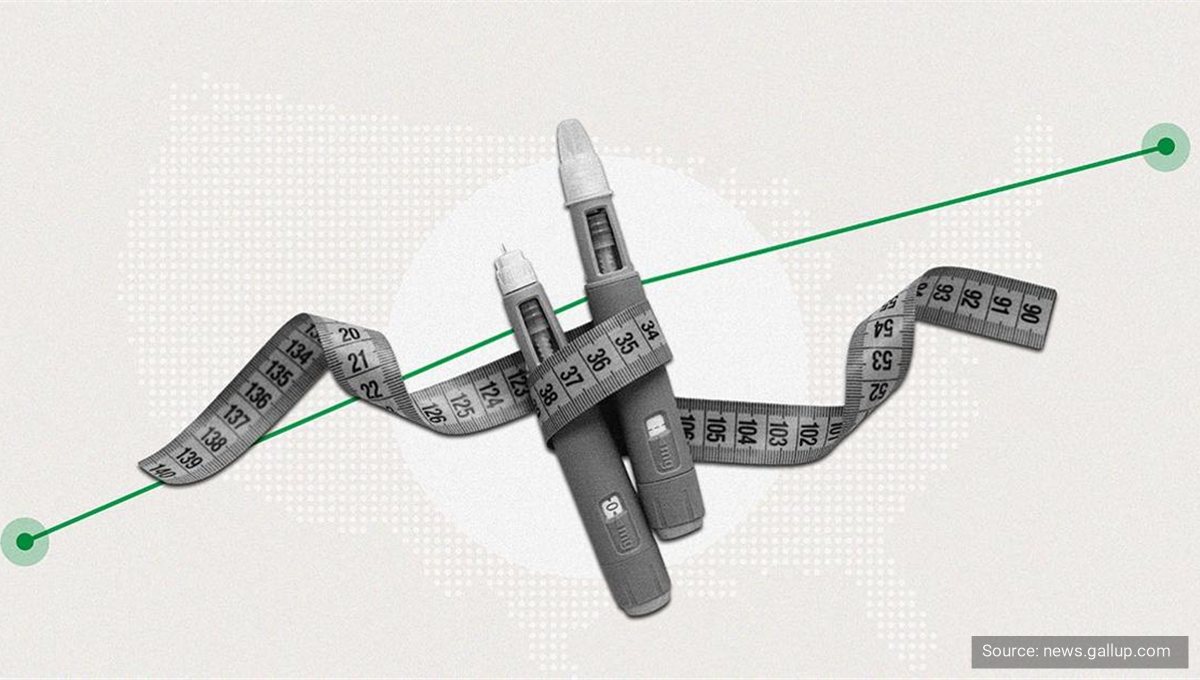
New Gallup polling shows GLP-1 use among US adults has surged to 11% this year, up from just 3% in 2024, and for the first time the national obesity rate has shown what researchers call a "meaningful" decline. At the same time, the picture is split sharply by payer. Medicare launched its GLP-1 Bridge on July 1, offering seniors access at a flat $50 monthly copay, while several major private plans dropped weight-loss GLP-1 coverage the very same week. A parallel JAMA Pediatrics study published July 20 shows GLP-1 use rising fast among adolescents and young adults too, even as bariatric surgery rates fall. The category is growing on both the demand side and the access-inequality side simultaneously. For consumer healthcare and pharma companies the question is no longer how many patients will use GLP-1s, but which companies will secure sustainable access to them. As public and private reimbursement diverge, commercial advantage will increasingly be determined by payer strategy, distribution models and patient support rather than efficacy alone. Competitive advantage will increasingly be built through payer partnerships, affordability models, patient support and integrated care pathways that determine who actually reaches patients at scale. ([(JAMA Pediatrics) + Gallup)
Into the weekend
A digestible curation of what currently has our attention, and what we make of it.

Why one theologian turned down Anthropic
Carmody Grey, a philosopher and theologian at Radboud University, was invited to San Francisco by Anthropic for a "research partnership with wisdom traditions," meant to help shape the moral character of its AI models. She turned it down, and wrote about why in the FT. Her worry was the framing: she was repeatedly steered toward questions about whether an AI model could suffer or has a "character," when the questions she wanted to ask were about power, accountability, and what these systems do to the humans using them. She's blunt about the asymmetry: an industry with this much capital can buy academic credibility with commodities even more valuable to intellectuals (influence and prestige) even without paying a fee. Her real target is the habit, common across the AI industry, of using the language of biology and emotion to describe systems that are neither living nor feeling, and the way that language quietly shapes how much trust and intimacy users extend to a product.
Seventy and soaring: Singapore teaches its elderly citizens parkour
In a country where more than one in five citizens is now 65 or older, Singapore has found an unlikely tool for healthy ageing: parkour. Movement Singapore, founded in 2022 by former parkour athlete Tan Shie Boon, started with a single 64-year-old student and now teaches 35 people aged from their late forties to 75, most of them women, to crawl, climb, balance and fall safely across the rails and walls of their own housing estates. In four years, the group has recorded only one significant injury. The city-state's Urban Redevelopment Authority sees it as validation of a decades-long planning philosophy built around independence and connection rather than simply providing benches: as one URA director puts it, seniors are "no longer content" with just having somewhere to sit. A city environment can either infantilise older people or actively keep them capable, and Singapore has decided which one it wants to be.

Save the date: Bits & Aperitivo 2026 on September 28 in Munich
THE Go-To Side Event of Bits & Pretzels 2026 is back: our exclusive Bits & Aperitivo returns to Munich's most beautiful rooftop, and we are delighted to invite you to join us. Together with Bird & Bird and Schlote Partners, we once again bring together founders, investors, corporate leaders, and innovators from across Europe for an evening of meaningful conversations and valuable connections. Please SAVE THE DATE for the evening of September 28, 2026. The official invitation registration and further event details will follow in the next weeks. We just want to make sure to see you there.
More insights
23 October 2026Newsletter
Edition 07: gaming is bigger than its category
Our new whitepaper on why gaming is bigger than its category, Whole Foods names the food trends for 2027, and a Munich robot maker passes $1bn.
13 min read
23 October 2026Whitepaper
The Gaming Growth Layer
Gaming has become one of the largest digital behaviours in society. Most brands outside the industry still treat it as a niche.
1 min read
Don’t want to miss what comes next?
Bloom Bites brings the thinking behind our work to your inbox, usually before it turns into an article. One mail, no noise, unsubscribe in a click.