
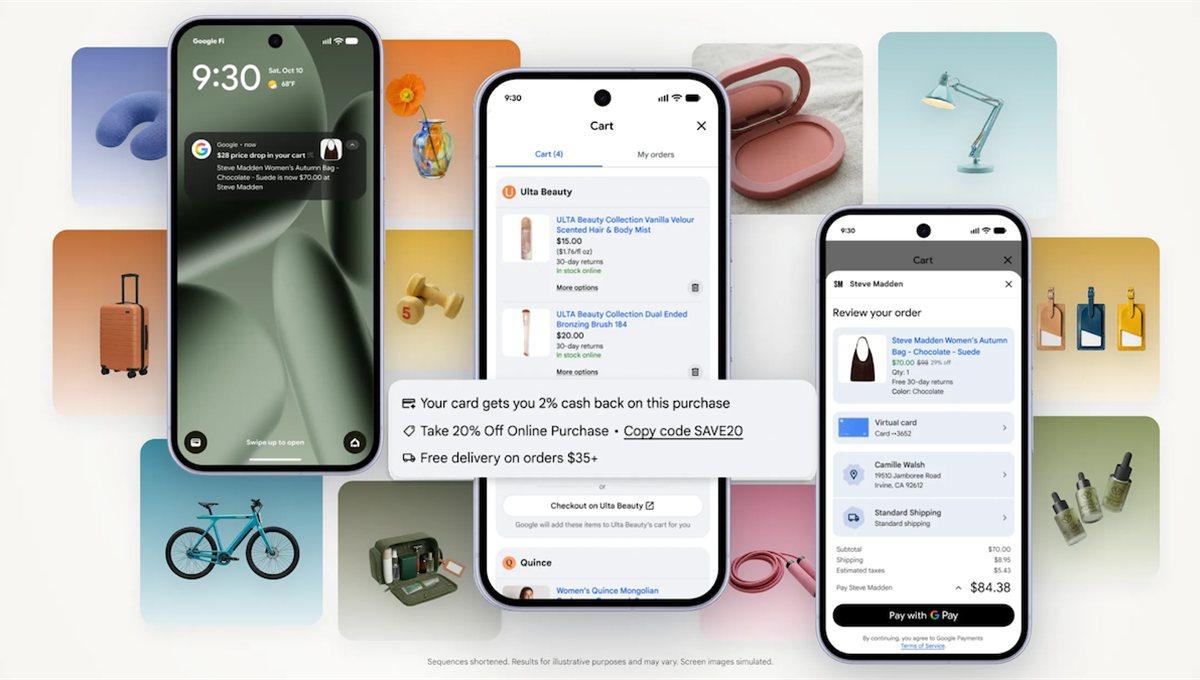
When the checkout moves into Google Search
Google made Universal Cart available to US users on 15 October, as TechCrunch reported.
- Published
- 6 November 2026
- Reading time
- 1 min
- Topics
- AI, Healthcare, Consumer Goods
- Written by
Bloom Partners Team
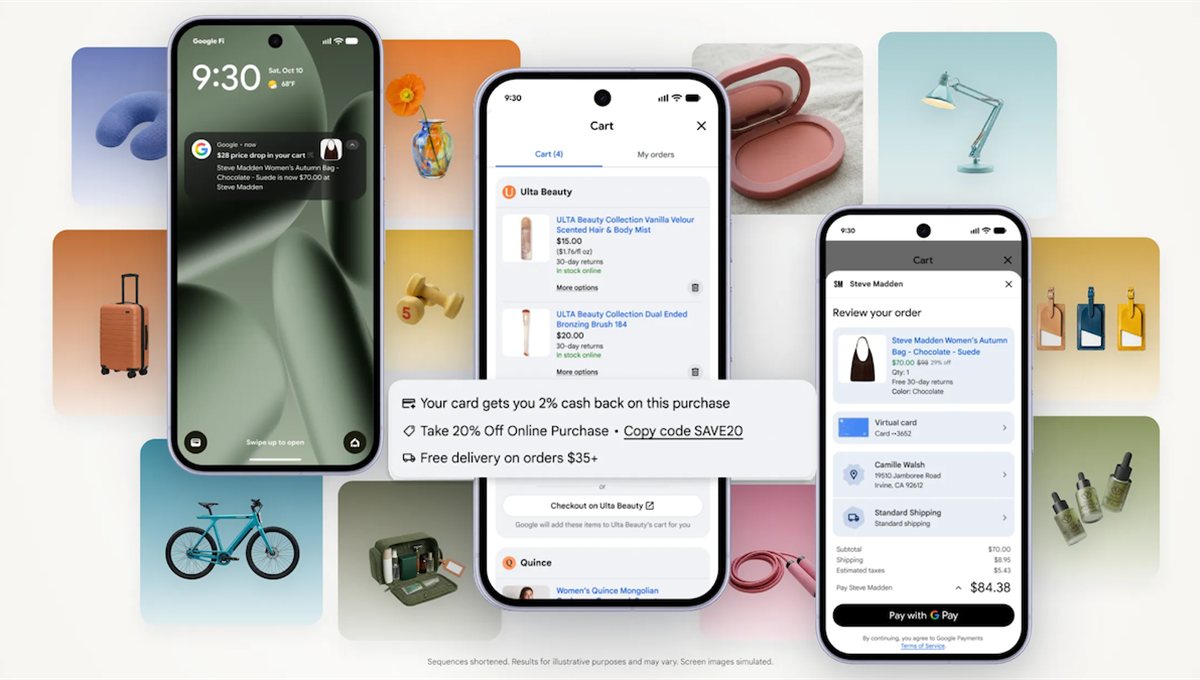
Google made Universal Cart available to US users on 15 October, as TechCrunch reported. First shown at Google I/O in May, the cart works across Search and the Gemini app, collects products from several retailers in one place, alerts shoppers to price drops and returning stock, and suggests how to pay based on card perks. Checkout runs on the Universal Commerce Protocol, an open standard Google introduced this year so that AI agents and retailers can complete a purchase together.
- According to Google, the brand remains the merchant of record. Shoppers can pay with Google Pay in a few taps or move to the merchant’s site to finish.
- Search itself is starting to build pages for some questions. At I/O, Google showed mini apps generated for a single query, background agents that watch the web on a user’s behalf, and a follow-up box under each AI Overview that leads straight into a conversation in AI Mode, as SiliconANGLE reported.
In a CNBC interview on 20 October, Daniel Hulme, chief AI officer at WPP, discussed AI agents that may soon recommend and buy products on people’s behalf, which raises the question of who the customer then is, the person or their AI. For brands, more of discovery and purchase moves onto pages they do not design. The product data, reviews and offers an agent reads become the shop window. The website remains the place where a brand tells its story, but fewer shoppers may arrive there before they decide. (TechCrunch)
More insights
6 November 2026Article
Bolzano, here we come
Our team came together in Bolzano, South Tyrol.
2 min read
6 November 2026Article
What Poppi’s shrinking earnout tells us
When PepsiCo bought the prebiotic soda brand Poppi in May 2025, it paid about $1.9bn in cash and agreed to pay a further $300m if certain performance milestones are met by the third quarter of 2027, and nothing otherwise.
1 min read
Don’t want to miss what comes next?
Bloom Bites brings the thinking behind our work to your inbox, usually before it turns into an article. One mail, no noise, unsubscribe in a click.